Wet Granite Beats Marketing: What Taiwan's Trail Runners Actually Lace Up
The Survey, Loosely Conducted
I am not a researcher. I am a guy with a clipboard and an opinion, standing at trailheads near Neihu, Xiangshan, and the Yangmingshan trail network on a rotating schedule for about three weeks.
I logged 47 pairs of trail shoes. Not scientific. But when you write down 47 pairs, patterns show up whether you want them to or not.
- Challenger family (mostly the 7): 11 pairs
- Speedgoat (5 and 6): 8 pairs
- Salomon (Sense Ride and Speedcross): 9 pairs
- Torrent 3: 6 pairs
- Zinal 2: 4 pairs
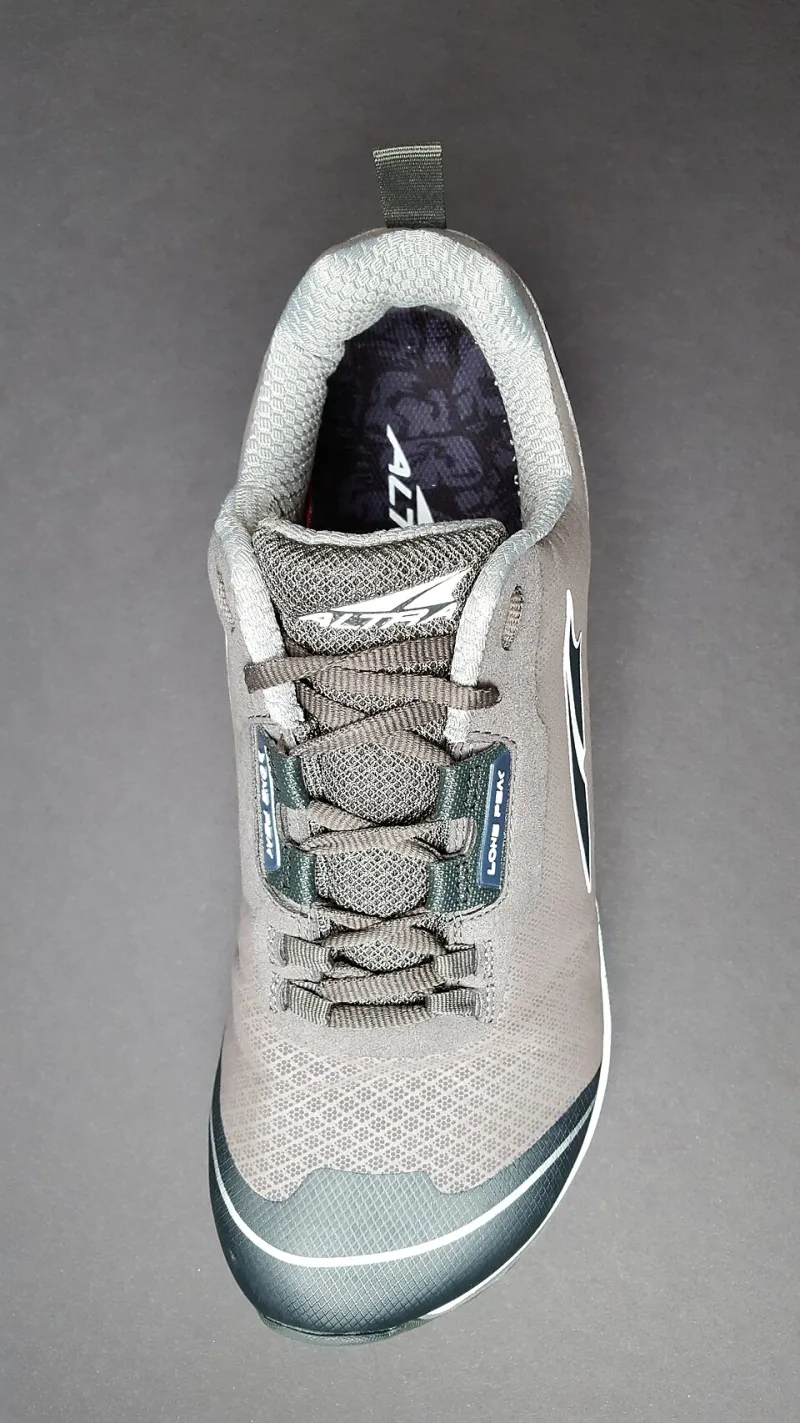
- Inov-8, Altra, Merrell combined: 6 pairs
- Tecton X 3: 3 pairs
The headline: the Challenger is not a niche shoe here. It is the default. And the Speedgoat — the shoe US forums treat as the obvious answer for anything with dirt on it — showed up roughly as often as Salomon's Speedcross, which most American runners file under 'mud specialist.'
Why Stairs Change Everything
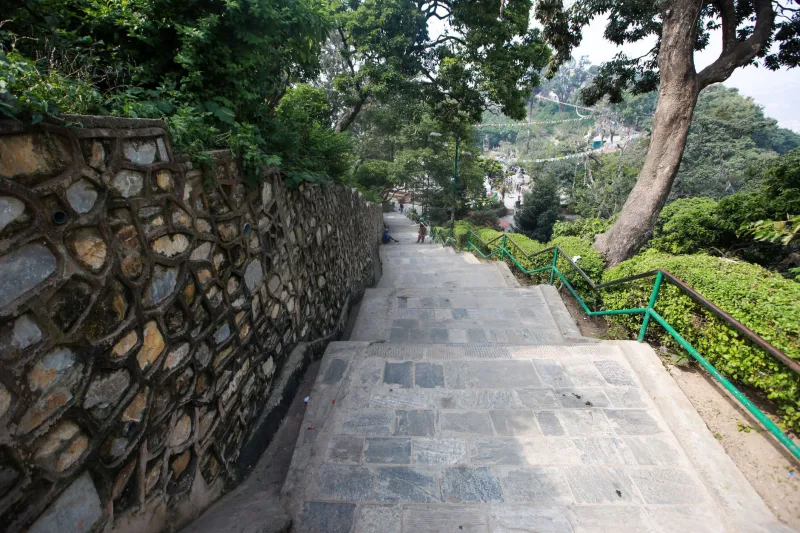
Taiwan's trails are not trails in the Colorado sense. Many of them are vertical infrastructure: thousands of stone and timber steps cut into a hillside, often wet, often with a handrail bolted on.
A shoe optimized for buffed singletrack with rolling grade is not automatically optimized for 4,000 stairs. What matters on stairs is a wide, stable platform, a sole stiff enough to keep your foot from folding over the front edge of a step, and an upper that does not let your foot slide forward on descents.
The Challenger does all three cheaply. It is heavier than a Speedgoat and much less exciting, and it is exactly the kind of boring that survives a two-hour stair descent.
Wet Granite and the Grip Conversation
Here is where the local logic diverges hardest from US forum opinion.
Neihu's golden quartz sandstone — the stuff everyone photographs — is not dry. Even in a dry week it holds moisture in the shaded sections. Add Taipei's summer afternoon storms and you get polished, glazed rock with visible dark streaks where the water runs.
US grip discourse is mostly about mud. Taiwan grip discourse is about adhesion on wet stone. Those are different problems. Deep lugs help with clay; lug depth does almost nothing on slick rock. What helps on slick rock is rubber compound and contact area.
That is exactly why you see so many Torrents and Zinals here. Sticky rubber, moderate lugs, low-to-medium stack. Runners on rocky descents here favor being able to feel the surface, and they will trade cushion for that in a heartbeat.
The Humid Clay Concession
None of this means lugs are irrelevant. Yangmingshan's volcanic clay gets genuinely greasy after rain, and lugs help there. The local compromise is usually a moderate-lug shoe with a fast-draining upper, plus wool socks, plus the willingness to accept that your shoe will be soaked by mile four and that this is normal.
American trail advice treats a wet shoe as an emergency. Taiwanese runners treat it as Tuesday. That shift in expectation is worth importing even if the shoes are not.
The Boom and Bust of It
One thing I noticed: plenty of the runners in expensive carbon-plated trail shoes were on their way up, and plenty of them were on their way up at a walking pace. The rocker and the plate are fun. They are also not the thing keeping anyone upright on wet stone.
Meanwhile, the people moving fastest downhill were, almost without exception, on low-stack sticky-rubber shoes with visible tread wear. Several pairs looked three seasons old.
What US Runners Should Steal From This
One: buy for your worst surface, not your favorite one. If 15 percent of your trail day is slick rock, that 15 percent decides whether you finish happy.
Two: stack height is a stability decision. A 40mm-plus trail shoe is a wonderful thing on buffed climbs. It is a commitment on wet descents.
Three: the Speedgoat is still good. This is not a takedown. It is a great shoe for long, dry, rolling efforts. It is simply not the automatic answer for a staircase in a rainforest.
Four: match the shoe to the descent, not the climb. Nobody remembers an easy climb. Everybody remembers a bad descent.
If You Are Shopping From the States
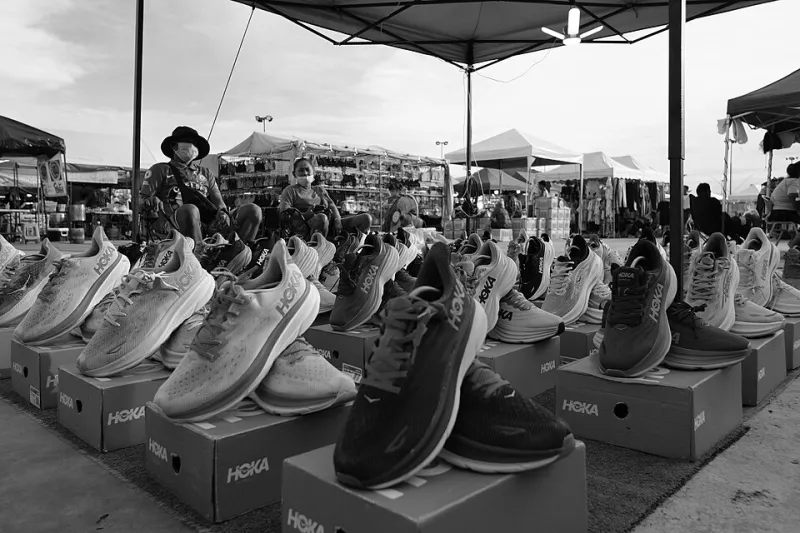
You cannot test wet granite in Ohio. But you can do this: find the steepest, wettest, most awkward stretch within driving distance, and do your try-on laps there, not on the store's flat treadmill. Ask what the rubber is, not just how deep the lugs are. And when you import a HOKA from Taiwan to save money, budget for the fact that you are buying a shoe tuned for humidity, stairs, and stone — a setup that is closer to the Pacific Northwest than to the Southwest.
The Speedgoat is not wrong. It is just not the whole map.