Volcanic Vert and 88-Degree Mornings: Why My Yangmingshan Training Block Beat a Summer in Boulder
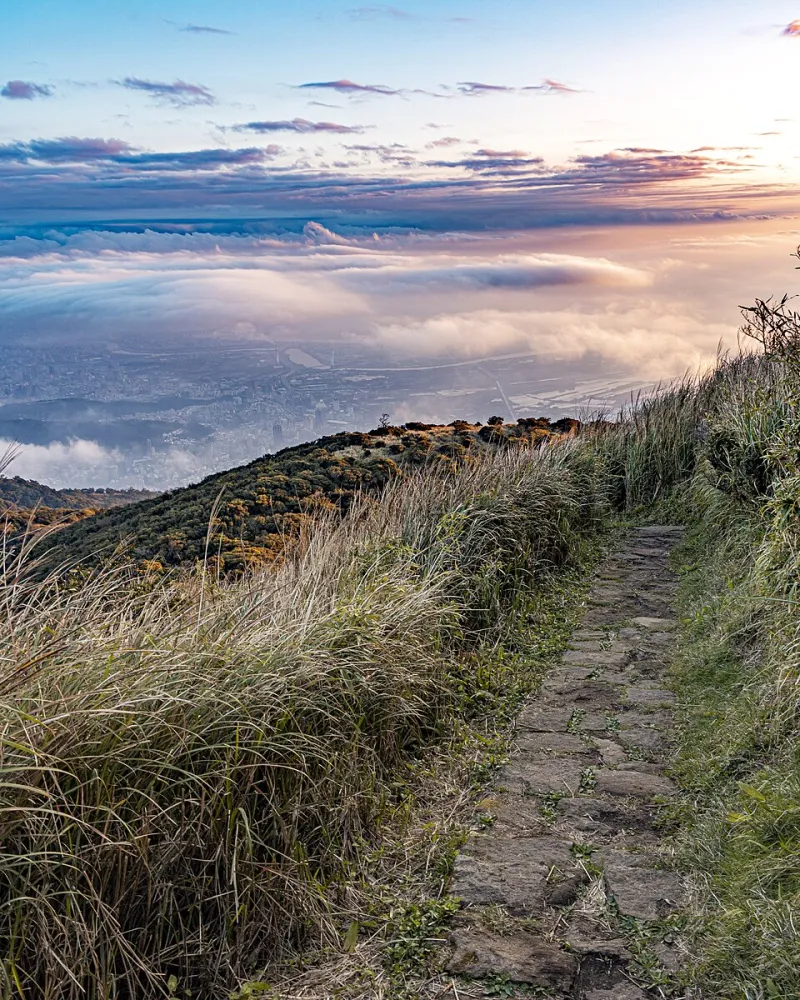
Photo: Hermesli, CC BY-SA 4.0, via Wikimedia Commons
Everyone told me I was throwing my race season away. Leaving Colorado in June — the heart of front-range training season — to spend six weeks in Taiwan sounded like a vacation dressed up as training. My coach raised an eyebrow. My running group sent me off with jokes about bubble tea.
Six weeks later, I ran a 12-minute PR at Broken Arrow's VK and felt fresher on the steep pitches than I ever have in my life. Here's what happened, and why you might want to book a flight instead of a spot at altitude camp.
The Setup: Yangmingshan Is Not a Joke
Yangmingshan National Park sits an hour from central Taipei, and it's essentially a volcano playground. Fumaroles hiss out of hillsides. The trails — stone steps, root ladders, packed dirt — stack relentless grade. The classic route up Qixing Main Peak is only about 1.6 miles from trailhead to summit, but you'll climb over 3,000 feet doing it, much of it on stairs that force a power-hiking rhythm identical to what you'd use on the skinnier pitches of Pikes Peak's Barr Trail.
Now layer on the weather. Summer in Yangmingshan runs 85–92°F with humidity pinned near 90%. You don't run in that heat — you survive it, adapt to it, and get weirdly strong doing it.
The Heat Adaptation Argument
There's real science here. Heat training spikes plasma volume and improves sweat efficiency, and studies have shown performance benefits that carry over to cool-weather racing — which is exactly what you want for a California or Colorado race that starts at 5 or 6 a.m. in 40-degree air.
The nuance most US trail runners miss: you don't need to sacrifice vert to get heat stimulus. In Boulder or Salt Lake, a hot day often means you skip the climb. In Taiwan, the climb IS the day, and the heat comes free with it. Every stair repeat at 90% humidity is a double stimulus — aerobic engine and thermoregulation — in one session.
By week three, my resting heart rate dropped six beats. By week five, runs that left me wrecked in week one felt like tempo efforts. When I stepped onto the start line at Palisades for Broken Arrow, 70°F felt like a recovery day.
What I Packed (and What I'd Change)
Shoe choice mattered more than usual. The wet stone and slick root sections on Taiwan's trails punish a road-cushion shoe, but the stair-heavy vert punishes an aggressive lug plate too. I ran most days in the HOKA Mafate Speed 4 — the deep lugs handled wet granite, and the chunky midsole saved my quads on the 3,000-foot descents back down. For flatter recovery days along the Keelung River paths, the Clifton did fine, but honestly, everything in Taipei involves stairs, so the Mafate earned its keep.
A few Taiwan-specific notes:
- Convenience stores are aid stations. Taiwan's 7-Elevens and FamilyMarts are everywhere, even near trailheads. Cold electrolyte drinks, salted snacks, and air conditioning every 90 minutes changed how I structure long climbs.
- Hot springs are recovery. The Beitou and Wulai hot spring districts are cheap, walkable from transit, and soaking in a 105°F mineral bath after a 4,000-foot climbing day is a recovery tool I'm now convinced beats any compression boot.
- Start at dawn. Not for heat avoidance — you want some heat — but because afternoon thunderstorms in the mountains are violent and frequent.
The Crossover: Racing Back Home
The transition back matters. I landed in California eight days before Broken Arrow and immediately felt springy — the humidity had suppressed my top-end speed, and it came roaring back in dry air. That's the classic heat-block payoff: your easy pace feels easier, your VO2 ceiling feels higher, and cool race morning feels like someone took the parking brake off.
Would this work for Pikes Peak's Ascent? I'd argue yes, with a caveat. Taiwan's biggest single climb tops out around 3,700 feet of vert, so you're training the engine, not the full 7,800-foot day. If you're targeting Pikes, use Taiwan for the aerobic and heat base, then do one big-day simulation at home.
Should You Actually Do This?
A Taiwan training block isn't for everyone. If you can't handle running when a 90°F day feels like a sauna, you'll be miserable. Language barriers, visa logistics, and the lack of a ready-made training group are real friction.
But if you're chasing a mountain race PR, tired of the same Boulder loops, and curious what a subtropical climbing culture can add to your legs — Taiwan delivers. The vert is absurd, the recovery culture (hot springs, cheap massage, incredible food) is elite, and the heat adaptation is the kind of legal performance edge almost nobody in the American trail scene is exploiting.
My flight cost less than a month of altitude-camp lodging. The stairs were free. The PR was priceless.